1715
The deadbeat escapement
George Graham removes the recoil at every tick. Accuracy goes from minutes a day to seconds.
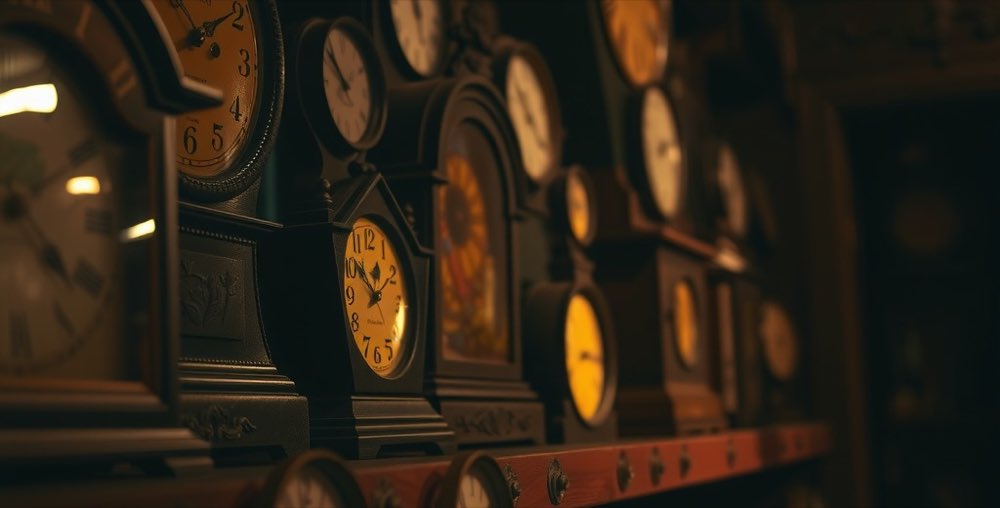
San Diego County
A consignment booth of antique clocks, vintage hi-fi speakers, and estate glass in San Diego County.
The premise
Nothing in this booth was made to be thrown away. A mantel clock from 1890 has a movement you can take out with two screws, clean with a brush, and put back — and it will keep time for another century. A speaker cabinet from 1962 has a crossover you can re-cap on a kitchen table. That is not nostalgia; it is how things were built before anything was glued shut.
Fig. I — Anchor escapement, English pattern
General reference, not a listing — the figures below describe a typical eight-day striking movement, not any one piece in the booth.

The escapement is the part that makes a clock a clock: it lets the gear train advance one tooth at a time, and it is the reason a wound weight becomes a measured second rather than a fast unwinding crash.
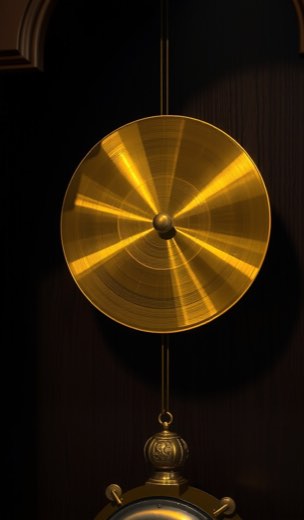
The pallet faces are the two polished steel surfaces that take every impact the clock will ever make. Illustration — placeholder image.
Three departments
 I
I
Mantel, wall, and shelf clocks — Seth Thomas, Ansonia, Gilbert, Telechron, and German movements. Serviced and running where noted.
 II
II
Mid-century and vintage hi-fi speakers and audio gear — walnut cabinets, paper cones, and the kind of sound modern plastic does not make.
 III
III
Depression glass, carnival glass, pressed and cut crystal, and art glass picked up through San Diego County estates.

Seventeen hundred to eighteen hundred
Almost everything a mantel clock does mechanically was settled in these hundred years. The pieces on the shelf are what that century handed down — the same escapement, the same going train, made later and made cheaper.
1715
The deadbeat escapement
George Graham removes the recoil at every tick. Accuracy goes from minutes a day to seconds.
1726
The gridiron pendulum
Brass and steel rods set against one another so heat cannot lengthen the beat.
1761
Longitude, solved
Harrison's fourth timekeeper sails to Jamaica and returns seconds out. A machine fixes a problem astronomy could not.
1770s
The bracket clock matures
Striking and repeating work becomes standard domestic equipment rather than a commission.
1780s
Breguet's refinements
The going barrel and self-winding work; the vocabulary of fine clockmaking is essentially finished.
1798
The type on this page
Bodoni cuts the letterforms these headlines are set in. Caslon, in the body text, dates to 1722.
A clock is the only machine in the house that asks you for something every week.
On the shelf
Inventory moves. What is listed here is what is physically on the shelf today — each piece with its own page and its own photographs.
The first pieces are being photographed — check back shortly.
Where to find us
The booth is inside a consignment store in San Diego County.
The booth's address is being finalised. Send a message below and we'll reply with directions.
Ask about a piece